Late summer is a time of abundance, with gardens overflowing and the fields and forests offering plenty of wild foods to forage. Since ancient times, people have celebrated this season with harvest festivals, giving thanks for the food that would sustain their families through the long cold winter months.
Celebrating Lammas
Observed on August 1st, Lammas marks the beginning of the grain harvest. The name Lammas comes from the Old English hlāfmæsse, meaning “loaf mass.” Also known as Loaf Mass Day, it is a Christian holiday that originated in medieval England. Families would bake a loaf of bread from the first grain harvested each year and bring it to church to be blessed to express their gratitude and hopes for a bountiful harvest.
Lammas is closely associated with Lughnasadh (pronounced LOO-nuh-suh), the ancient Celtic harvest festival. According to Irish mythology, Lughnasadh was founded by the god Lugh in memory of his foster mother, Tailtiu. It is said that she died from exhaustion after clearing a large area of forested land for agricultural use. Following her death, Lugh held a funeral gathering and games in her honor.
Tailtiu’s story is a reminder of the labor and sacrifice involved in cultivating the land and producing the food that is so essential for life. Ancient societies were all too familiar with the struggle to produce enough food to sustain their communities. A successful growing season would quite literally determine whether there was enough food to survive until the following year’s harvest.
Because of this, the beginning of the harvest season was a very important time. Each year, Lughnasadh marked the occasion with athletic competitions, feasting, and other festivities. Rituals were also an important part of the festival, with offerings of the first fruits of the harvest made to the gods in hopes of ensuring there would be plenty of food for the months ahead.
Both Lammas and Lughnasadh reflect the importance of the harvest and our relationship with the crops that sustain us. In modern times, many people continue to mark the changing of the seasons with rituals of gratitude, much as ancient cultures did. Today, Lammas is still celebrated by baking bread, making corn husk dolls, gathering seasonal foods, and enjoying a harvest feast.
Foods for Lammas
Baking bread is a very popular Lammas tradition, due to the holiday’s association with the first harvest. Foods made with wheat, corn, and barley are commonly enjoyed as part of the celebrations. Breads, pies, muffins, and other baked goods are all wonderful additions to a Lammas feast.
Seasonal fruits and vegetables are also popular ingredients in Lammas dishes. Apples, berries, corn, squash, and other late summer produce are included in a variety of dishes to celebrate what is ripe and abundant this time of year. Incorporating wild, foraged foods is one of my favorite ways to honor nature’s bounty alongside the crops that have been lovingly cultivated throughout the growing season.
Foraging Sumac
One such wild food that is ripening in mid to late summer is sumac. Several species of edible sumac (Rhus spp) grow wild throughout North America, most commonly smooth sumac (R. glabra), staghorn sumac (R. typhina), and fragrant sumac (R. aromatica). These species all produce clusters of red, fuzzy drupes (fruits that contain a single seed).
Sumac fruits have a tangy flavor that is a lovely addition to a variety of dishes. The dried and ground fruits of R. coriaria are commonly used as a spice in Mediterranean and Middle Eastern cuisines. This species is a cousin to the North American varieties, which can be used similarly.
Sumac berries should be harvested when they turn a deep red color, indicating they are fully ripe. Rain will wash away the compounds that give sumac its tart flavor, so try to collect the drupes before any heavy rains occur.
To harvest sumac, snip the plant’s stem just below the ripe, red fruit clusters. As is important when harvesting any wild food, only gather plants that you can 100% identify. It’s also important to choose plants that aren’t directly alongside a road or that may have been sprayed with pesticides.
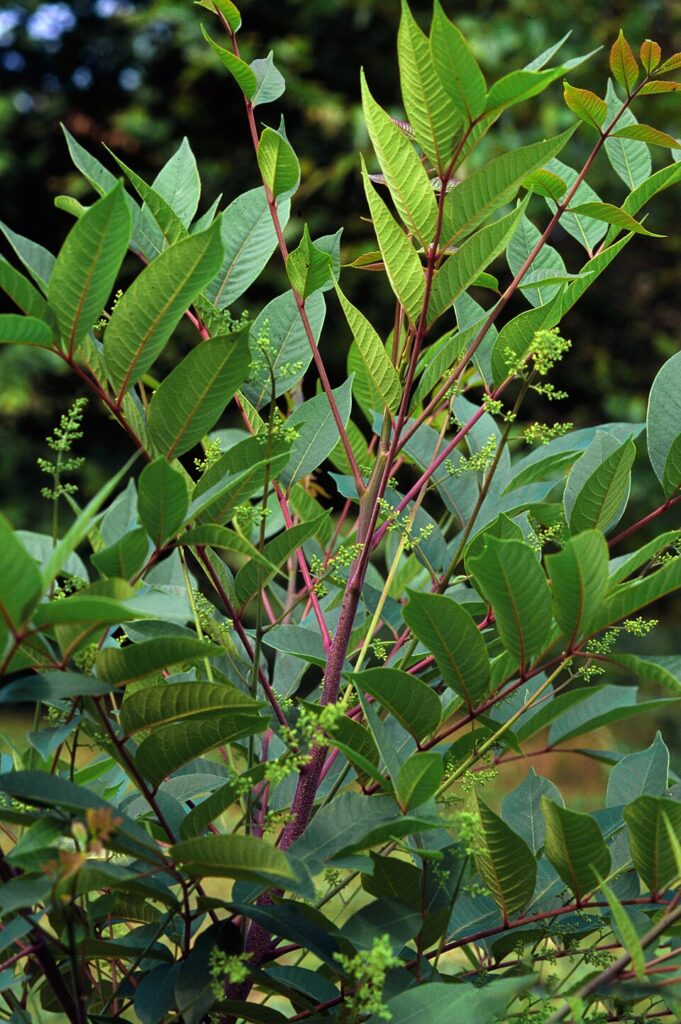
Toxicodendron vernix by James H. Miller & Ted Bodner, Southern Weed Science Society, Bugwood.org. Licensed under the Creative Commons Attribution 3.0 Unported license.
A Toxic Lookalike: Poison Sumac (Toxicodendron vernix)
When foraging edible sumac varieties, poison sumac (Toxicodendron vernix) is a toxic relative that should be avoided. All parts of the plant contain urushiol, the same oil in poison ivy that causes an itchy, blistering skin reaction. Breathing smoke from the burning plant matter is very dangerous.
How to Identify Poison Sumac
While often considered a toxic lookalike of Rhus spp., poison sumac does have some distinct differences that help to set it apart.
1. Habitat and Growth Habit
Poison sumac grows in wet, flooded soils such as swamps and bogs. It doesn’t grow on dry upland sites like roadsides, fields and sunny hillsides where staghorn and smooth sumac thrive. It grows as single, scattered individuals, not in large groups like other sumacs.
2. Bark & Leaves
It is a small tree, or shrub with grey bark and large compound leaves that have 7-13 smooth, hairless leaflets. Unlike staghorn and smooth sumac, these leaflets are not toothed. The leaves are often held upward and look somewhat stiff.
3. Berries
The plant has clusters of small yellow flowers that develop into distinct hanging clusters of small whiteish berries that appear very similar to those of poison ivy.
After the leaves fall off in the autumn, the berries may stay on the stem well into the winter months.
Processing Sumac
Once at home, place the drupes in a paper bag and hang them somewhere with good airflow for a few weeks (you can also dry them out in a dehydrator to speed things up).
When the drupes are dry you can begin processing them into sumac spice.
Note: While I would assume the process for processing other edible sumacs is the same, I only have experience working with staghorn sumac (R. typhina).
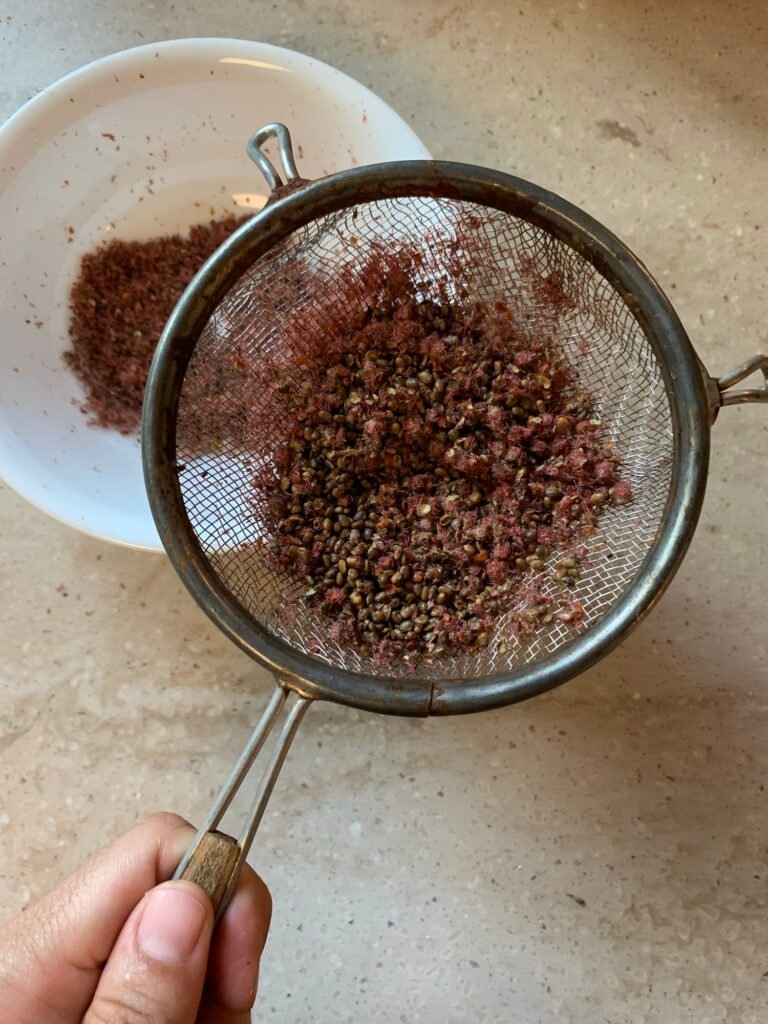
First, gently pull apart the little red berries, called drupes. Sometimes you will find the center of the cones have been infested by tiny worms. If this is the case, keep the drupes that still look healthy and red and discard the parts damaged by worms and/or covered with worm poop.
Put the drupes in a blender and give it a couple good whirs, until you see that the fluffy red outer part of the berries has separated from the seed in the center.
Dump the mixture into a fine strainer. Rub the seeds and shake until all of the red fluff falls through and just the seeds are left in the strainer.
Discard the seeds and store the sumac spice in an airtight jar. It’s now ready to be added to a variety of recipes, including these delicious muffins.
Bake Apple Sumac Muffins for Lammas
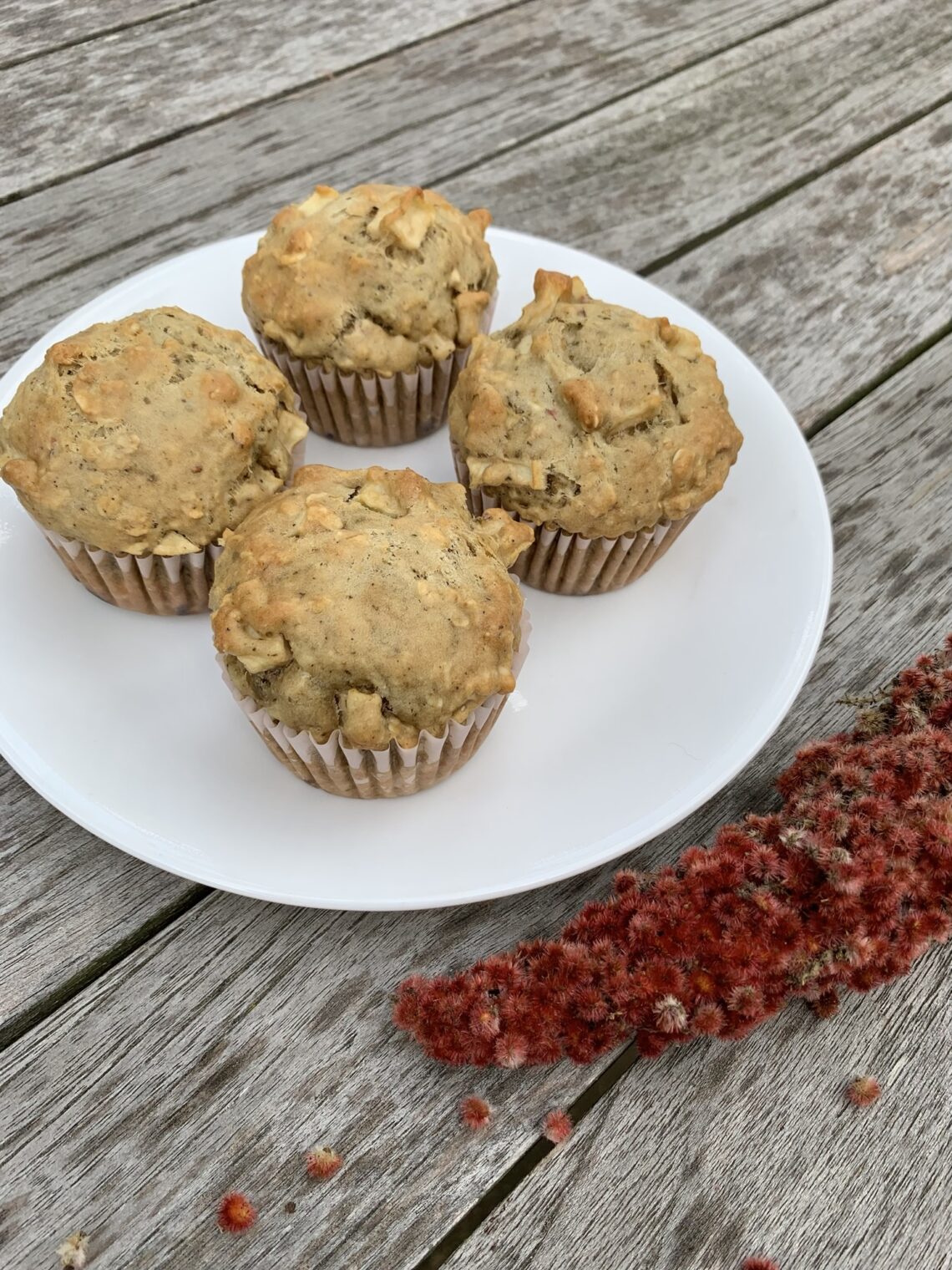
Apple Sumac Muffins combine the first apples of the season with citrusy wild sumac, making them a delicious addition to a Lammas feast or brunch. The oats and flour nod to the grains traditionally celebrated at Lammas, while apples and foraged sumac bring in the flavors of the late summer harvest.
To make them you will need:
- Flour
- Oats
- Baking soda
- Salt
- Sugar
- Sumac spice
- Egg
- Milk
- Water
- Olive oil
- Apples
Directions:
Mix flour, oats, baking soda, salt, sugar, and sumac together in a large bowl. Stir in the egg, water, milk, and olive oil until well incorporated. Then fold in the apples.
Pour the batter into a muffin pan that has been greased or lined with muffin liners. Bake at 350°F for 30 minutes, or until the tops turn golden brown.
Ingredients
Method
- Mix flour, oats, baking soda, salt, sugar, and sumac together in a large bowl. Stir in the egg, water, milk, and olive oil until well incorporated. Then fold in the apples.
- Pour the batter into a muffin pan that has been greased or lined with muffin liners. Bake at 350°F for 30 minutes, or until the tops turn golden brown.
You Might Also Enjoy:


One comment on “Apple Sumac Muffins”