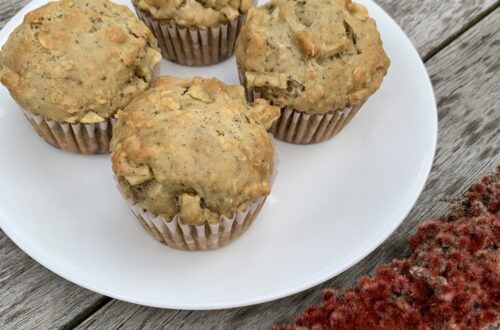
With its bright, tart flavor, sumac is a fun foraged ingredient to work with in the late summer. North American varieties of sumac can be used similarly to their cousin, R. coriaria, a spice commonly used in Mediterranean and Middle Eastern cuisines. Its complex, sour flavor adds a unique twist to a variety of dishes. I also like to add sumac to baked goods. Find my Apple Sumac Muffins recipe here.
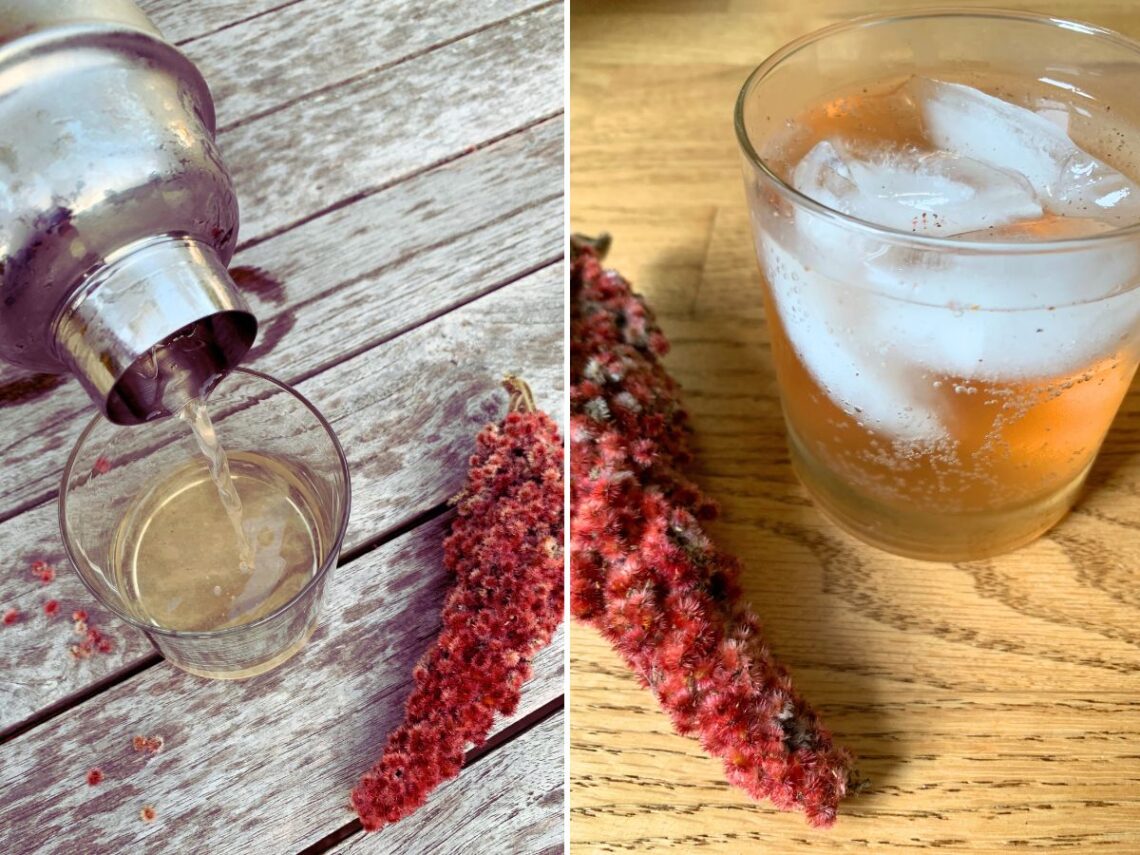
The ripe red drupes can be steeped in water to make an infusion reminiscent of lemonade, making a delicious and unique base for both cocktails and non-alcoholic beverages.
A Bit About Sumac (Rhus spp.)
There are around 35 species of Rhus, several of which produce an edible drupe. They are in the cashew, or Anacardiaceae family, and are also related to mangoes (Mangifera spp.), pistachios (Pistacia spp.), and poison ivy (Toxicodendron spp.).
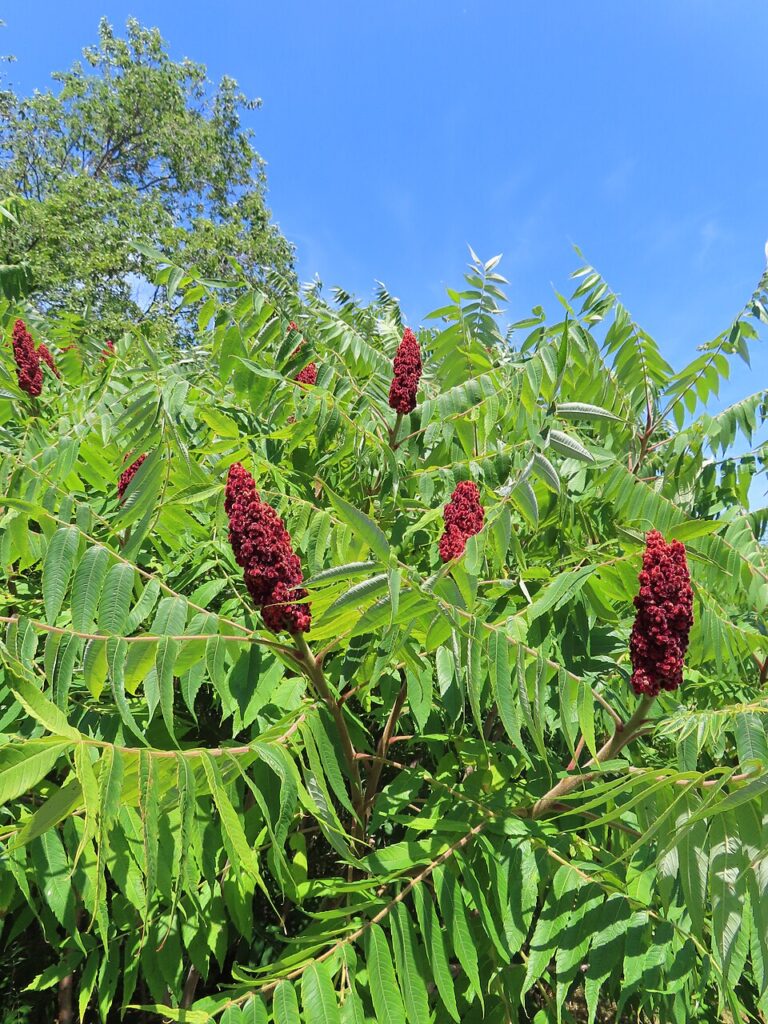
Three of the most common species of Rhus in the United States and Canada are Smooth sumac (Rhus glabra), Staghorn sumac (Rhus typhina), and Fragrant sumac (Rhus aromatica). The ripe, red drupes of all three North American species can be eaten fresh or dried. They are acidic and tart and are commonly used to make a beverage, often called “sumac-ade.”
To harvest sumac, snip the plant’s stem just below the ripe, red fruit clusters. As is important when harvesting any wild food, only gather plants that you can 100% identify. It’s also important to choose plants that aren’t directly alongside a road or that may have been sprayed with pesticides.
Traditional Uses of Sumac
These three Rhus species have a long history of use by Native Americans. The leaves were mixed with tobacco and smoked by various plains tribes. The berries, roots, inner bark, and leaves of smooth and staghorn sumacs have been used to make different colored dyes.
These sumac species also had applications in traditional medicine. Smooth sumac was used by various Native American tribes for nausea, diarrhea, hemorrhages, blisters, colds, rashes, asthma, and sore throat. Staghorn sumac was utilized similarly. The Natchez used fragrant sumac root to treat boils and the Ojibwa drank a decoction of its roots for diarrhea.
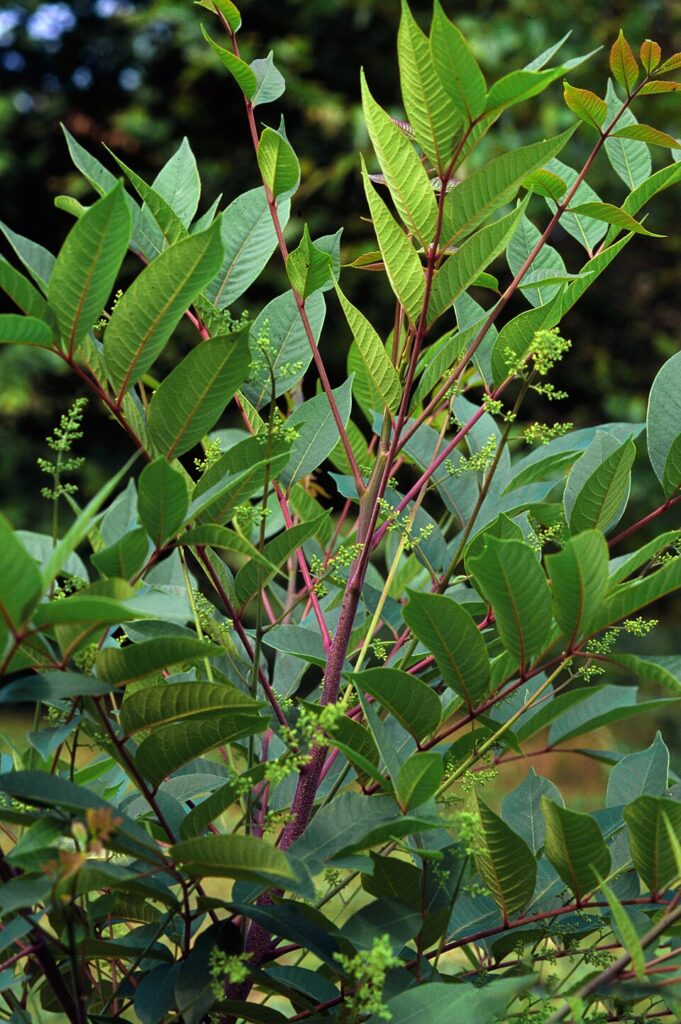
A Toxic Lookalike: Poison Sumac (Toxicodendron vernix)
When foraging edible and medicinal sumac varieties, poison sumac (Toxicodendron vernix) is a toxic relative that should be avoided. All parts of the plant contain urushiol, the same oil in poison ivy that causes an itchy, blistering skin reaction. Breathing smoke from the burning plant matter is very dangerous.
How to Identify Poison Sumac
While often considered a toxic lookalike of Rhus spp., poison sumac does have some distinct differences that help to set it apart.
1. Habitat and Growth Habit
Poison sumac grows in wet, flooded soils such as swamps and bogs. It doesn’t grow on dry upland sites like roadsides, fields and sunny hillsides where staghorn and smooth sumac thrive. It grows as single, scattered individuals, not in large groups like other sumacs.
2. Bark & Leaves
It is a small tree, or shrub with grey bark and large compound leaves that have 7-13 smooth, hairless leaflets. Unlike staghorn and smooth sumac, these leaflets are not toothed. The leaves are often held upward and look somewhat stiff.
3. Berries
The plant has clusters of small yellow flowers that develop into distinct hanging clusters of small whiteish berries that appear very similar to those of poison ivy.
After the leaves fall off in the autumn, the berries may stay on the stem well into the winter months.
Making A Sumac Infused Cocktail or Mocktail
Once you’ve safely identified and harvested an edible sumac species, there are plenty of delicious ways to enjoy its tart red drupes. One of my favorites is turning them into a refreshing infusion for late summer beverages.
How To Make a Sumac Infusion
The first step to making a sumac cocktail or mocktail is making a sumac infusion to use as a base for both the drink and the sumac flavored simple syrup.
You will need:
- Sumac berries (drupes)
- Water
Directions:
- Add sumac berries and water to a jar.
- Shake well and steep for 12 hours, shaking occasionally.
- Strain the liquid through a fine cheese cloth.
How To Make a Sumac Simple Syrup
Next you will make a sumac infused simple syrup to lend another layer of sumac’s tart, unique flavor.
You will need:
- Sumac infusion
- Sugar
- Combine the ingredients in a small saucepan. Bring to a gentle simmer and stir until the sugar has fully dissolved.
- Let the syrup cool, then transfer it to a clean bottle or jar and store it in the refrigerator.
How to Make a Sumac Cocktail or Mocktail
The final step in making a mocktail or cocktail is assembling the different components to make the final beverage. Because these two drinks share many ingredients, it’s easy to serve them both as alcoholic and non-alcoholic options at a late summer get together.
Sumac Rum Sour
You will need:
- Sumac simple syrup
- Sumac infusion
- White rum
- Ice cubes
Directions:
- Add rum, sumac infusion, and simple syrup to a cocktail shaker. Add ice and shake for 15–20 seconds, until well chilled.
- Strain into a glass over fresh ice, if desired, or pour into a chilled glass without ice.
Sparkling Sumac Mocktail
You will need:
- Sumac simple syrup
- Sumac infusion
- Sparkling water
- Ice cubes
Directions:
- Pour the sumac infusion and sumac syrup into a glass and stir together.
- Top off the drink with sparkling water and add some ice, if desired. Serve immediately.
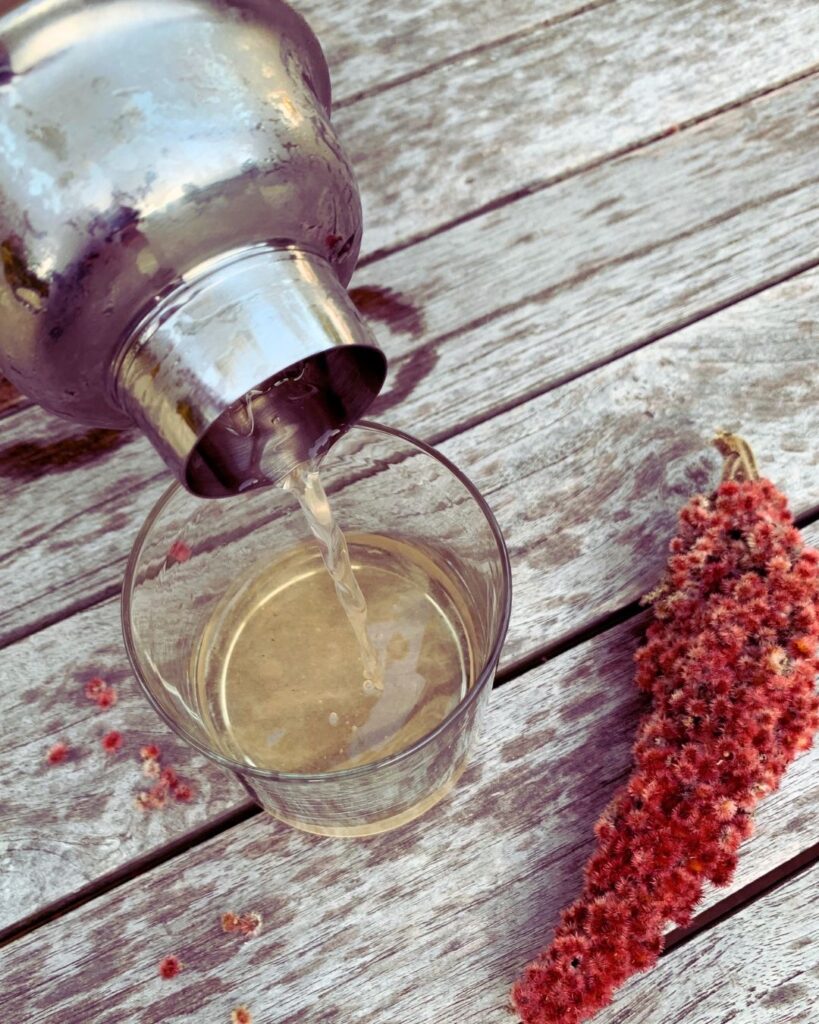
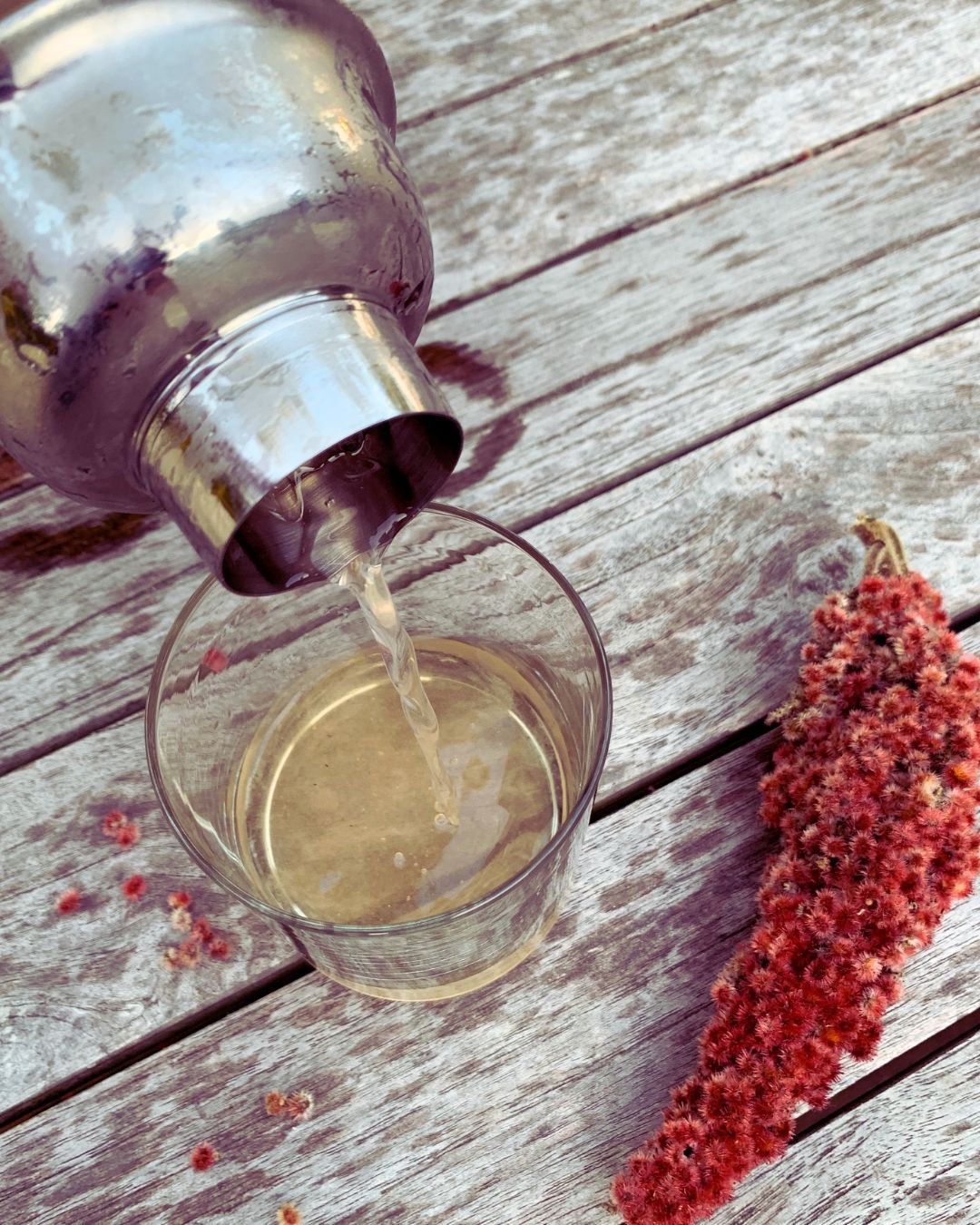
Sumac Rum Sour
The Sour is a popular cocktail that combines three components: spirit, citrus, and sweetener. This foraged iteration incorporates tart sumac infusion as the “sour” ingredient for a fresh take on the classic boozy beverage. Serve this wild crafted cocktail at your next fall get together or enjoy while relaxing by a bonfire.
Ingredients
Method
- Add sumac berries and water to a jar.
- Shake well and steep for 12 hours, shaking occasionally.
- Strain through fine cheese cloth.
- Combine the ingredients in a small saucepan. Bring to a gentle simmer and stir until the sugar has fully dissolved.
- Let the syrup cool, then transfer it to a clean bottle or jar and store it in the refrigerator.
- Add rum, sumac infusion, and simple syrup to a cocktail shaker. Add ice and shake for 15–20 seconds, until well-chilled.
- Strain into a glass over fresh ice, if desired, or pour into a chilled glass without ice.
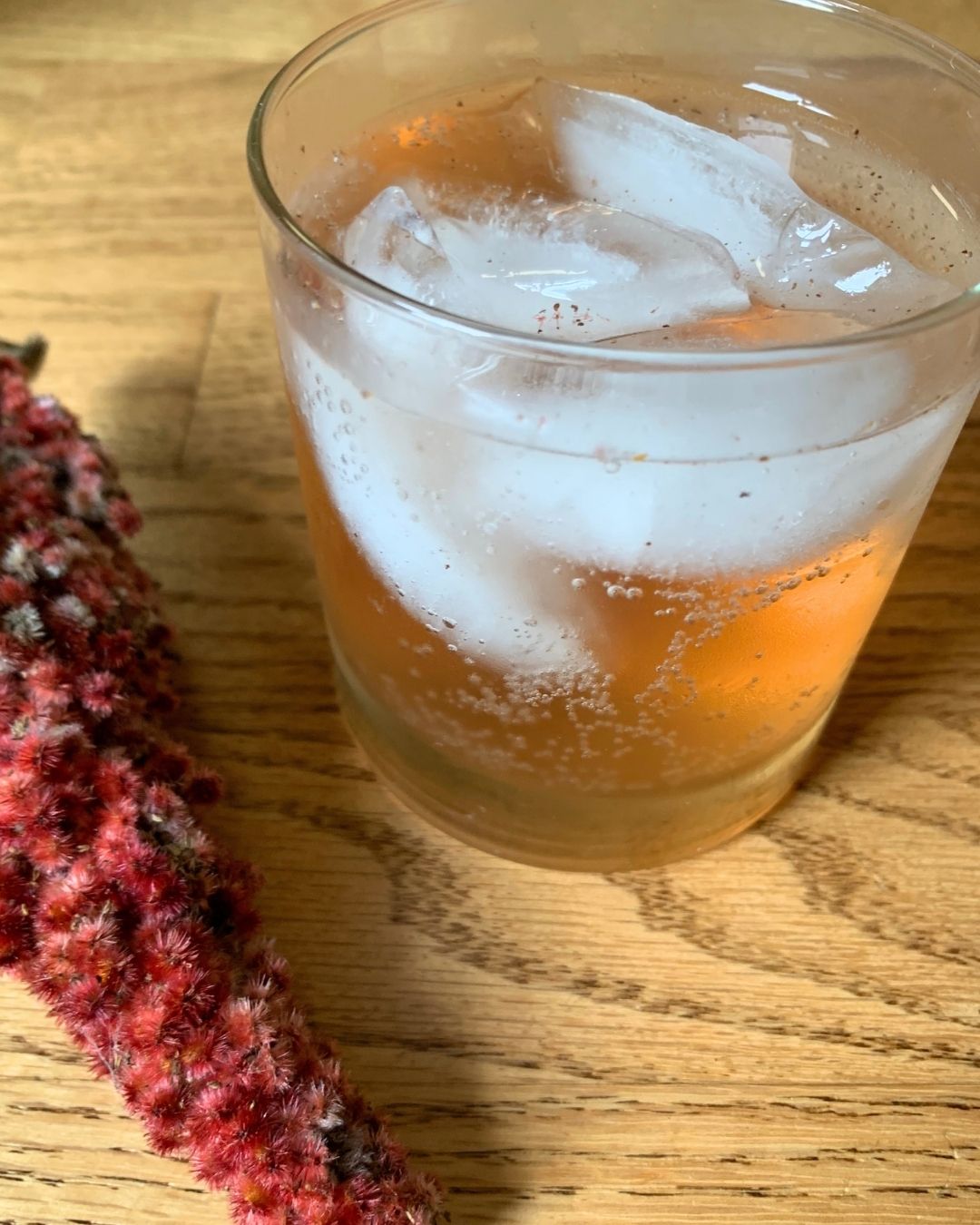
Sparkling Sumac Mocktail
A Sparkling Sumac Mocktail is a sweet, tart drink that tastes a little bit like sparkling lemonade. Sip it after a late summer walk. This foraged mocktail is also a tasty non-alcoholic alternative for those wishing to avoid alcohol.
Ingredients
Method
- Add sumac berries and water to a jar.
- Shake well and steep for 12 hours, shaking occasionally.
- Strain through fine cheese cloth.
- Combine the ingredients in a small saucepan. Bring to a gentle simmer and stir until the sugar has fully dissolved.
- Let the syrup cool, then transfer it to a clean bottle or jar and store it in the refrigerator.
- Pour the sumac infusion and sumac syrup into a glass and stir together.
- Top off the drink with sparkling water and add some ice, if desired. Serve immediately.