Last Updated on June 25, 2026
One of the best things about spring is all the wonderful weeds that start popping up everywhere. These unassuming plants are often overlooked in lieu of more exotic herbs, and are even scorned for their “invasive” nature. But, as plants that have numerous health benefits and grow easily, these common herbs definitely deserve more appreciation.
This blog post highlights six weeds that are common across the United States and in many other parts of the world. Learning to ID and use them means you’ll always have nature’s first aid kit handy when adventuring outdoors in the spring.
Tips for Safe & Responsible Wild Crafting
Whether you’re foraging plants for food or medicine, there are a few basic principles to be sure to follow for your own safety and the well being of the land where you’ll be foraging.
Choose Your Foraging Site Wisely
Don’t forage plants for food or medicine off the sides of roadways or in places where you think people may be inclined to spray chemicals. Toxic road runoff, car fumes, and pesticides render plants unsafe for human consumption, or use as herbal medicine. Be smart about where you forage and consider any potential toxins that may have been introduced to the area.
Respect the Land
Be sure to treat the area that you have chosen to forage with respect. Do not over harvest one small area. You want the plants to keep coming back every year so you, and others can enjoy them. Furthermore, it’s important to consider the insects and animals who depend on plants and fungi for food and habitat. Don’t ever take more than you need and never take all the plants from one spot.
Be considerate to the plants you are harvesting and don’t harm them any more than necessary. For example, if you are foraging something just for the greens, snip only the leaves, and leave the roots and part of the established plant intact.
Don’t Harvest in Nature Preserves
Nature preserves protect the health and well-being of their land and the plants that grow there. Don’t ever collect plants from protected areas.
No Trespassing
Know who owns the land you plan to forage and make sure you have their permission to do so. Most people don’t mind if you take their nettles (actually most people will thank you for doing so), but just make sure you ask first.
ALWAYS Know What You’re Harvesting
While many wild plants are edible and boast medicinal properties, there are also plants that can be dangerous if used medicinally or consumed. Know how to identify the plants you plan to use and make sure you know the proper methods for preparing them (i.e. some plants aren’t edible until they’re cooked). In general, it’s a good rule of thumb to never consume or make medicine from something you can’t identify with absolute certainty.
Common Spring First Aid Plants
If you’re adventuring outdoors this spring, there’s a good chance you’ll be able to find one or more of these weeds growing somewhere nearby. Keep an eye out and try to spot them in case the need for a first aid plant arises.
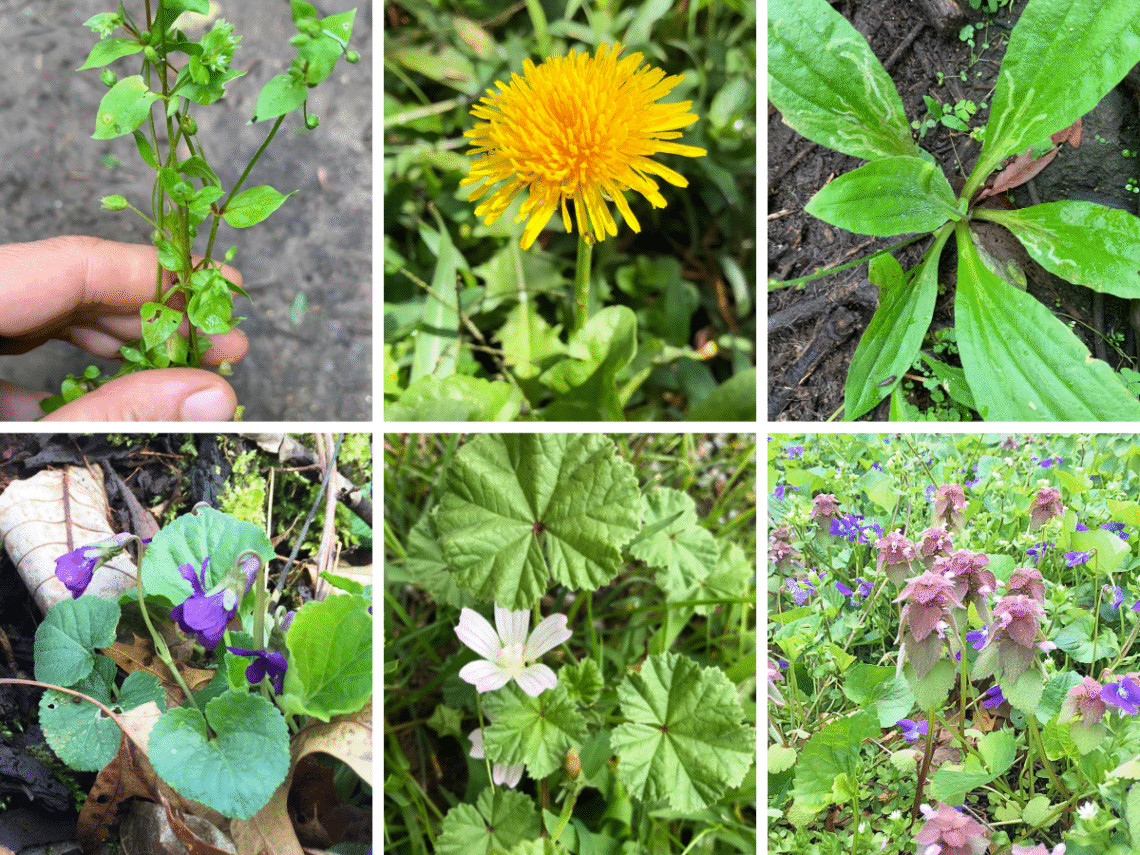
Plantain
Broadleaf plantain (Plantago major) and narrow leaf plantain (Plantago lanceolata) have similar properties and are used interchangeably.
Plantain is an excellent first aid herb, with numerous applications. It is antiseptic and promotes healing of wounds. Its astringency makes it useful for stopping bleeding. It has drawing properties that can help to pull out splinters and infections. It also has a cooling, soothing effect and may ease inflamed, itchy tissues. It has long been a cherished remedy for bug bites & stings, rashes, and burns.
Dandelion
Dandelion (Taraxacum officinale) is a prolific weed that can be found growing in many a lawn. It is said to have a beneficial effect on the digestive system and may ease an upset stomach. When used externally, it may be helpful for aching joints and muscles due to its anti-inflammatory properties. Research has found that dandelion leaf and flower protect the skin from sun damage when applied just prior to or immediately after exposure.
Chickweed
Traditionally, chickweed (Stellaria media) has a long history of use in skin care and has been used topically to ease redness, irritation, and itching. Studies have found that chickweed has anti-inflammatory, antibacterial, and antifungal properties and can help to promote wound healing.
Violet
Violet (Viola odorata) is a cooling, soothing, anti-inflammatory herb. It has been used to ease irritated, itchy, and inflamed skin issues, like rashes, insect bites, chafed skin, and abrasions. It promotes wound healing and has a mild antimicrobial effect. In herbal medicine, violets are utilized to ease joint pain.
Common Mallow
Common mallow (Malva neglecta) is related to marshmallow (Althaea officinalis) and has similar properties. It has high mucilage content that is soothing to irritation and inflammation. It has anti-inflammatory and antibacterial effects and has been used traditionally for bruises, wounds, abscess, joint pain, and stomachache. It can be applied topically to help soothe mosquito bites.
Purple Dead Nettle
Purple dead nettle (Lamium purpureum) has anti-inflammatory, antimicrobial, antifungal, pain relieving, and styptic (stops bleeding) effects. Traditionally it was used to stop nose bleeds and to ease painful conditions, like sciatica, and other bone and muscle pain.
How to Work with Spring First Aid Herbs
The above herbs can be utilized in the following ways. You can use one herb on its own, or blend a few herbs together based on the desired effect of your remedy.
First Aid in the Field
Spit Poultice
If you’re out on a hike without a first aid kit and either you or your little one get a cut or scrape, bee sting, or insect bite, spit poultices can be an invaluable remedy for stopping bleeding or offering relief.
To prepare, simply pick a leaf (or several of using chickweed or purple dead nettle) and chew until mushy. Then apply directly to the affected area.
Tea/Wash
Teas can be drunk to help soothe acute digestive problems or to help ease pain. Washes are prepared like teas, but are used externally for rashes, wounds, etc. It may not be practical to make tea/wash while out on a hike, but if you’re camping, you’ll probably have all the supplies on hand that you need.
Preparations to Make for Your First Aid Kit
Tincture
Tinctures are shelf stable and easy to toss into a backpack so they’re available if needed. They can be used internally or externally, depending on what the issue is.
Infused Oil
Infusing an oil with herbs imparts that herb’s beneficial properties. Herbal oils can be used for skin issues, or as a massage oil to ease painful muscles.
Salve
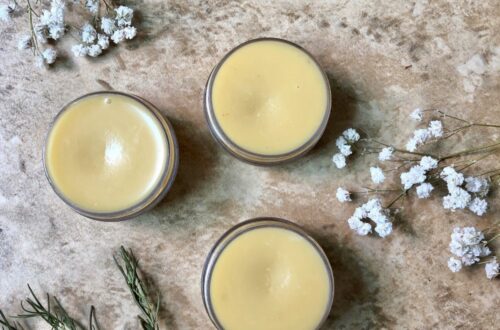
Herbal oils can be used to make salves, which can be preferable to oils since they are solid and less messy. Salves are also made using beeswax and other nourishing butters, like cocoa butter or shea butter, which are soothing to the skin.
Infused Witch Hazel Extract
Witch hazel extract infused with herbs is a great topical preparation to have on hand. It can be soothing for itchy, inflamed conditions like rashes, bug bites, and sunburn.
REFERENCES
Al-Snafi, Ali Esmail. “Medical benefit of Malva neglecta -A review.” IOSR Journal Of Pharmacy, vol. 9, no. 6, June 2019, pp. 60–67. https://www.researchgate.net/publication/333747368_Medical_benefit_of_Malva_neglecta_-A_review.
Azamat Kizi, Khamroeva Sarvinoz. “Pharmacological properties of plantago major L. and its active constituents.” International Journal of Medical Science and Public Health Research, vol. 03, no. 04, 1 Apr. 2022, pp. 9–12, https://doi.org/10.37547/ijmsphr/volume03issue04-03.
de la Forêt, Rosalee, host. “Benefits of Plantain with jim mcdonald.” Herbs with Rosalee, season 3, episode 6, 2 February 2022. https://www.herbalremediesadvice.org/benefits-of-plantain.html.
Di Napoli, Agnese, and Pietro Zucchetti. “A comprehensive review of the benefits of taraxacum officinale on human health.” Bulletin of the National Research Centre, vol. 45, no. 1, 9 June 2021, https://doi.org/10.1186/s42269-021-00567-1.
Singh, Ridhima, et al. “Stellaria media: A comprehensive review highlights the nutritional, phytochemistry, and pharmacological activities.” Journal of Herbmed Pharmacology, vol. 11, no. 3, 25 June 2022, pp. 330–338, https://doi.org/10.34172/jhp.2022.38.
Tobyn, Graeme, et al. “Viola odorata, sweet violet; viola tricolor, heartsease.” Medical Herbs, 2011, pp. 337–348, https://doi.org/10.1016/b978-0-443-10344-5.00037-9.
Yang, Yafan, and Shuangshuang Li. “Dandelion extracts protect human skin fibroblasts from UVB damage and cellular senescence.” Oxidative Medicine and Cellular Longevity, vol. 2015, 2015, pp. 1–10, https://doi.org/10.1155/2015/619560.