Last Updated on June 25, 2026
During the summer months, hot, dry weather and extra sun exposure from lots of time outdoors can take a toll on the health and appearance of our skin. Fortunately, there are many lovely herbs and botanical oils that can help moisturize & protect skin from premature aging due to sun damage, boost its overall health, and ease common summertime skin issues like sunburn, dry skin, & rashes.
Herbs for Summer Skin Care
Herbs can have wonderfully skin supportive qualities. Here are a few that are especially well suited for the summer months.
Cucumber (Cucumis sativus)
Cucumber is not just a refreshing, crunchy snack, it also a great addition to your summertime skin care. Fresh cucumber juice is soothing to irritation and sunburn. It is nourishing and has a natural cooling effect [1].
Aloe (Aloe vera)
Aloe (Aloe vera) has long been cherished for its ability to cool, soothe, and heal sunburn. (It can be used for other types of burns too.) Aloe gel is thought to have the ability to promote the growth of new skin cells. Studies have shown a preventative effect if it is applied prior to, during, and after sun exposure [2].
Aloe has anti-inflammatory, and wound healing effects. It is moisturizing and improves the elasticity of the skin, helping to reduce wrinkles and soften skin. It is astringent and a source of vitamins & minerals, making it naturally toning and nourishing [3].
Tea (Camellia sinensis)
Tea leaf is rich in polyphenols that can help to mitigate the negative effects of UV exposure. It helps to repair damaged skin. When applied topically, green tea protects skin cells from UV damage and actually decreases the amount of DNA damage that is caused by the UV exposure. It also reduces the severity of and cools sunburn.
An animal study found that both topical application and consumption of green tea decreased the formation of melanoma cells due to UV radiation, indicating that green tea may be promising for helping to prevent this type of cancer [2].
Walnut (Juglans regia)
Walnut has also been shown to have UV protective qualities. A water extract of the fresh green shell has been shown to react with proteins in the skin to create a substance that acts as a sunscreen [2].
Calendula (Calendula officinalis)
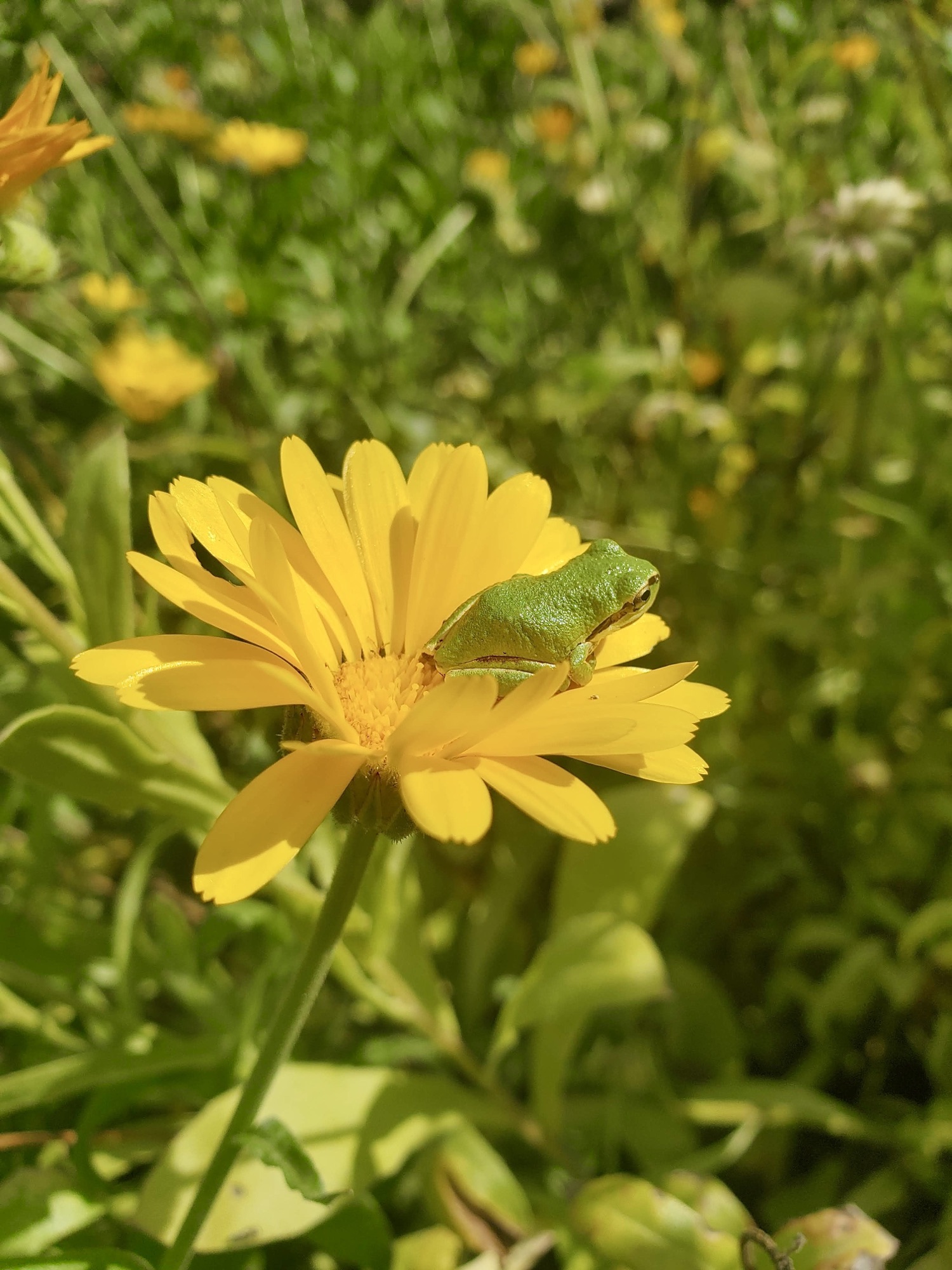
Calendula is a well-loved ingredient in skin care products due to its many beneficial effects. It is soothing, healing, and, anti-inflammatory. It can be helpful for a number of skin issues, including burns, bruises, wounds, and rashes [5].
Rose (Rosa spp)
Rose is soothing and cooling. It is a gentle astringent that is toning and nourishing to the skin. It is anti-inflammatory and rich in antioxidants, helping reduce skin damage caused by UV exposure, that reduces skin elasticity and leads to wrinkles [6].
Botanical Oils for Summer Skin Care
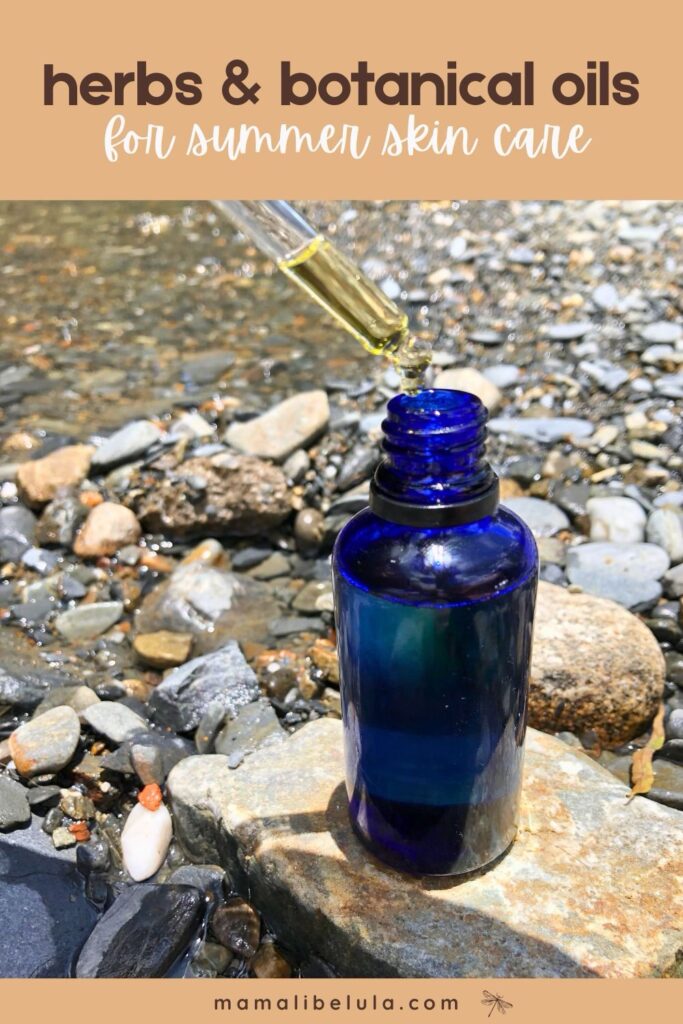
Various botanical oils can be utilized during the summer months to help improve the overall health of skin. Wheat germ (Triticum vulgare) oil is an excellent source of vitamin E, an antioxidant that is key to skin health. It is nourishing and deeply hydrating. Avocado (Persea americana) oil is also rich in vitamin E, and other vitamins, protein, and fatty acids, helping to moisturize and protect the skin [2].
Extra virgin hazelnut (Corylus avellana) oil, sunflower oil (Helianthus annuus), and sesame (Sesamum indicum) oils are also excellent sources of vitamin E [2], which helps to reduce inflammation and has photoprotective effects [4]. Sesame oil can also act as a low-SPF sunscreen. Studies have shown that it blocks 30% of UV rays [2].
Rosehip (Rosa canina) seed oil is anti-inflammatory, deeply hydrating, and is rich in vitamins A, C, & E. It helps to improve collagen production, improving the tone and elasticity of skin and helping to reduce wrinkles. It can also reduce the negative effects of sun exposure [2].
Pumpkin (Cucurbita pepo) seed oil contains around 40-50% linoleic acid, which is rich in antioxidants and helps to improve skin health, which makes it more resistant to damage from the elements [2].
Borage (Borago officinalis) oil contains large amounts of gamma-linoleic acid (GLA), which is helpful for a number of skin issues. It reduces inflammation, moisturizes, and helps to promote skin repair. It is particularly healing to dehydrated, weather-damaged, and aging skin [2].
Evening primrose (Oenothera biennis) oil also has high levels of GLA, helping to boost overall health and regenerate skin. It’s deeply hydrating and helps slow skin aging [2].
Several oils have demonstrated UV protective properties. Coconut (Cocos nucifera), peanut (Arachis hypogaea), and olive (Olea europaea) oils block about 20% of UV rays. While it isn’t derived from botanical sources, it’s also worth mentioning that consuming large amounts of fish oil also has a photo protective effect, possibly even up to SPF 5. It may also reduce the body’s inflammatory response to UV exposure [2].
Keep your skin happy, healthy, and looking it’s best this summer with the help of these nourishing, soothing, and protective herbs and botanical oils.
References
[1] Mukherjee, P.K., Nema, N.K., Maity, N., and Sarkar, B.K. P.K. (2013). Phytochemical and therapeutic potential of cucumber. Fitoterapia, 84, 227–236. https://doi.org/10.1016/j.fitote.2012.10.003.
[2] Korać, R.R. and Khambholja, K.M. (2011). Potential of herbs in skin protection from ultraviolet radiation. Pharmacognosy Reviews, 5(10): 164–173. doi: 10.4103/0973-7847.91114
[3] Sharma, P., Kharkwal, A. C., Kharkwal, H., Abdin, M. Z., & Varma, A. (2014). A Review on Pharmacological Properties of Aloe vera. International Journal of Pharmaceutics, 29(2), 31–37. https://www.researchgate.net/publication/270157982_A_Review_on_Pharmacological_Properties_of_Aloe_vera
[4] Michels, A.J. Vitamin E and Skin Health. (2012). Linus Pauling Institute, Oregon State University. https://lpi.oregonstate.edu/mic/health-disease/skin-health/vitamin-E#authors-reviewers
[5] Silva, D., Ferreira, M.S., Sousa-Lobo, J.M., Cruz, M.T., and Almeida, I.F. (2021). Activity of Calendula officinalis L. Flower Extract. Cosmetics, 8(31). https://doi.org/10.3390/ cosmetics8020031
[6] Safia, A., Aamir, Z., Iqbal, A.,Rafi, S., and Zafar, M. (2019). Assessment of Rose Water and Evaluation of Antioxidant and Anti-inflammatory Properties of a Rose Water Based Cream Formulation. International Journal of Pharmaceutical and Clinical Research; 11(1): 43-48. https://www.researchgate.net/publication/331906604_Assessment_of_Rose_Water_and_Evaluation_of_Antioxidant_and_Anti-inflammatory_Properties_of_a_Rose_Water_Based_Cream_Formulation



2 Comments on “Botanicals for Summer Skin Care”