Last Updated on March 11, 2026
Homemade sourdough bread is amazing, but the time and effort it takes isn’t always practical. Sometimes I forget to start my loaf ahead of time, or it’s a cold, overcast day, and my dough just isn’t rising. So when sourdough just isn’t in the cards but I still want homemade bread, soda bread comes to the rescue.
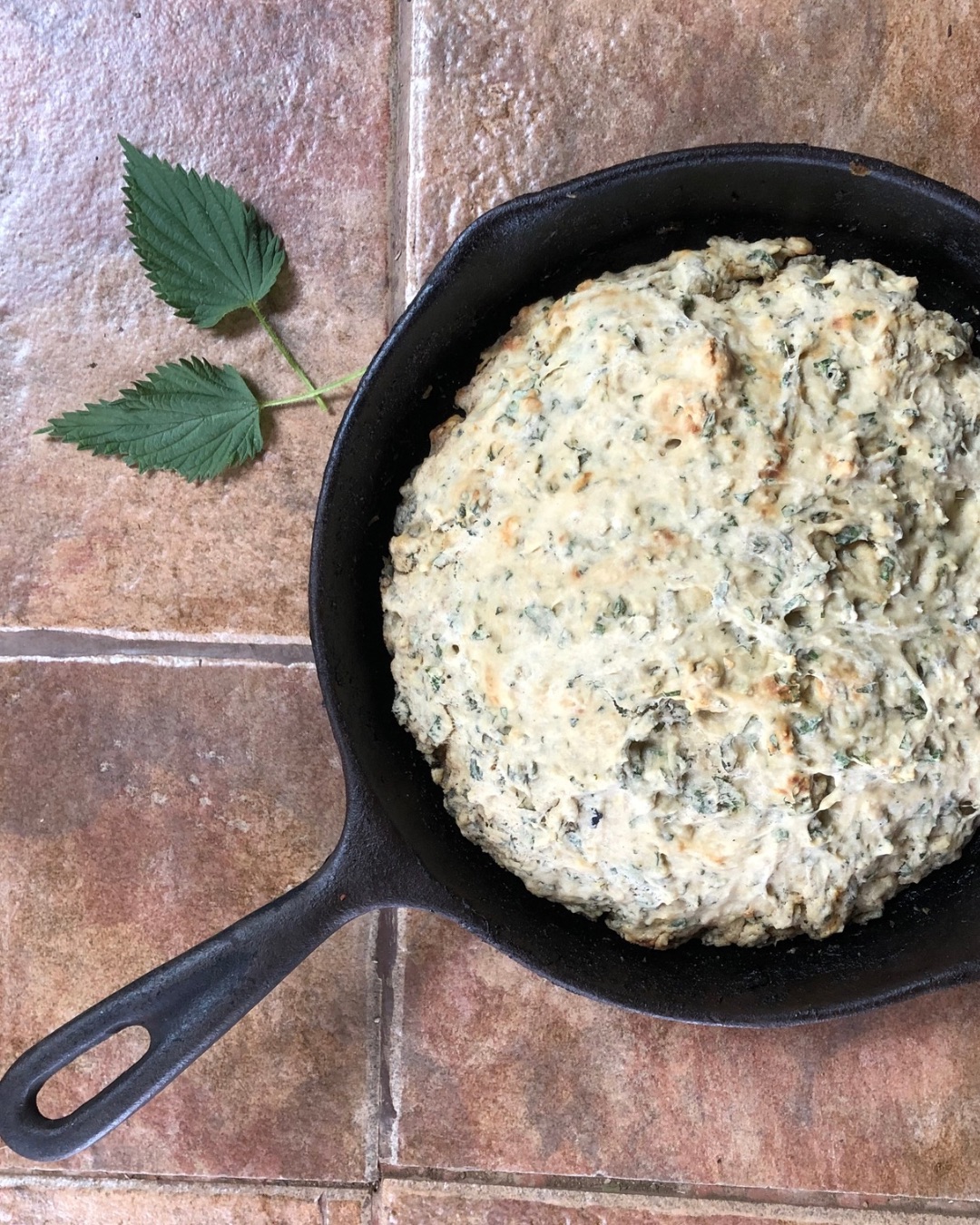
Rustic and simple, yet super tasty, this nettle soda bread is one of my favorite quick bread options. It comes together in a jiffy (hence the name “quick bread”) and is a perfect way to use fresh nettle tops that emerge in the spring. Enjoy right out of the oven, slathered with butter & topped with a sprinkled of salt or pair it with a hearty soup or a breakfast scramble.
Making Soda Bread
Traditionally made with buttermilk and baking soda, soda bread rises quickly thanks to a simple chemical reaction. The lactic acid in the buttermilk reacts with the baking soda, forming carbon dioxide bubbles that act as a leavening agent. Unlike yeast bread, this reaction happens immediately, which means you don’t have to wait for the bread to rise.
Many modern kitchens don’t keep buttermilk on hand, but it’s easy to make a substitute using milk and vinegar. Simply combine the two in a separate bowl and let the mixture sit for a few minutes. The vinegar sours the milk, creating a tangy, slightly thickened liquid that mimics traditional buttermilk and provides the acidity needed to react with the baking soda so the bread rises properly.
Nettle: A Spring Superfood
Long consumed as a traditional pot herb and spring tonic, nettle (Urtica dioica) is the perfect addition to this simple bread. It’s a source of antioxidants, vitamins A, B, C, and K, along with minerals like calcium, iron, and magnesium. Nettles are also rich in fiber and protein, lending extra nourishment.
Nettle leaves have a mild, earthy flavor that is often compared to spinach. They are a versatile green that can be added to breads, soups, and other savory dishes. Herbalists also like to use nettle to make a deeply nourishing tea.
Foraging and Processing Nettles
Nettle is widely distributed across North America, and can be found growing in every province and state in Canada and the US, except for Hawaii. It thrives in moist, rich soils, and is often found growing near streams, along trails, and in disturbed soil.
As with any wild plant you plan to use for food or use medicinally, it’s very important to make sure you’re able to properly identify nettles before harvesting.
Going foraging with someone who is knowledgeable about the wild plants growing in your area or consulting a local field guide is an important step you should take before consuming any plants you gather in the wild, to ensure you are IDing them properly.
Additionally, you should only harvest from clean areas that haven’t been exposed to pesticides, or other contaminants. It is best to avoid harvesting plants that are very near the roadside, as they are likely to have been exposed to high levels of pollutants.
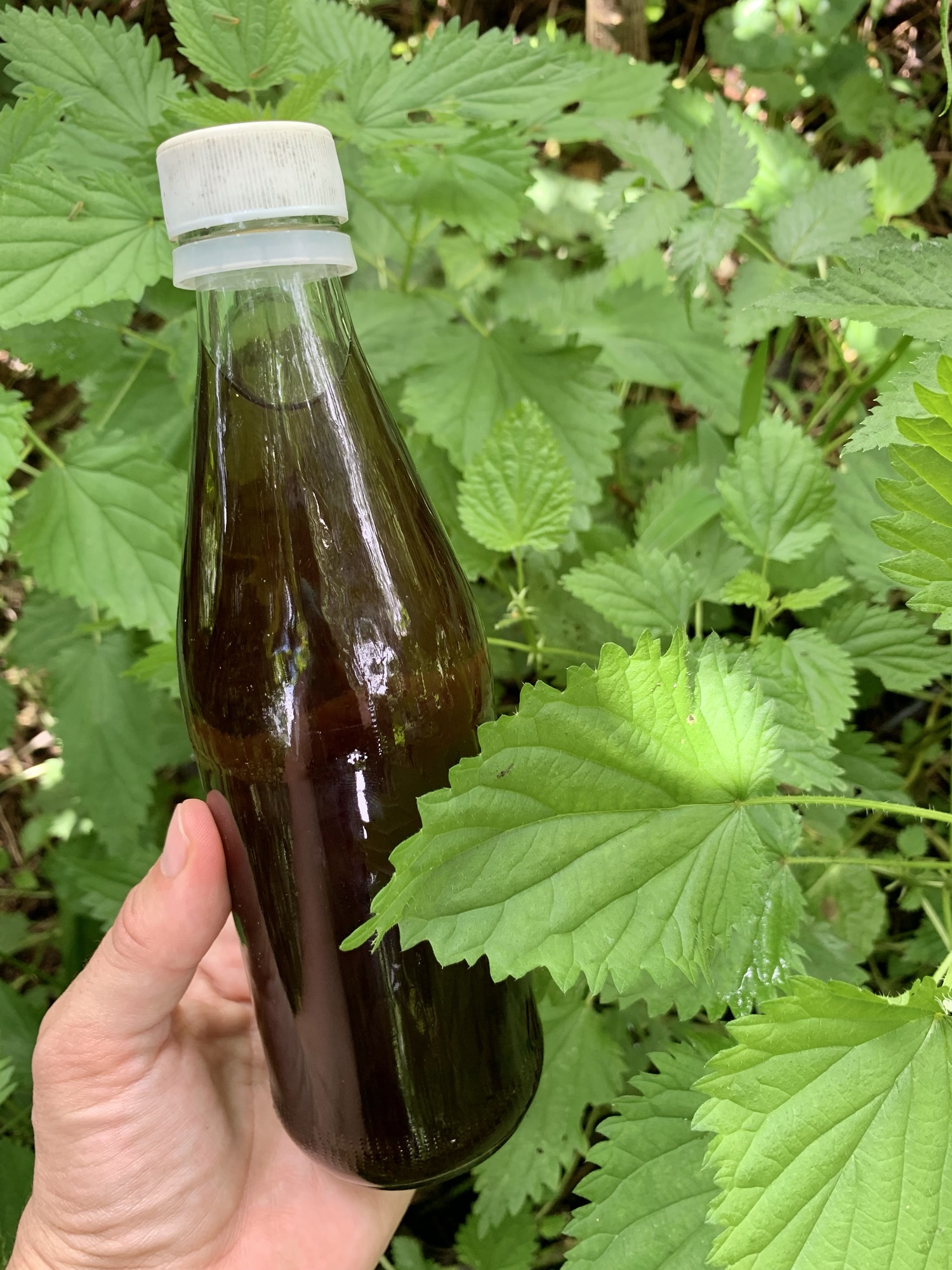
Spring is the perfect time to harvest nettles, as the tender tops and leaves of the young plants are the best for eating. Nettles are covered in tiny stinging hairs, so many people prefer to wear gloves while gathering and handling them. To harvest, use pair of scissors or small garden pruners to clip off the tops and young leaves.
Before using the nettles, give them a quick rinse with cool water to remove any dirt or insects. Then, strip the leaves from the thicker stems. Again, you may want to wear gloves for this process to avoid having tingly fingers afterwards. Heating nettle, however neutralizes its sting, making it completely safe to consume.

How to Make Nettle Soda Bread
Nettle soda bread is quick and easy to make, and comes together with just a few ingredients. Whip up a loaf to accompany spring soups, breakfasts, and more.
To make it, you will need:
- Fresh nettle leaf, finely chopped
- Flour
- Baking soda
- Salt
- Panela or brown sugar
- Milk
- Vinegar
Directions:
Add the flour, baking soda, salt, sugar, and finely chopped nettle leaves to a bowl and mix to combine.
In a separate bowl, mix together the milk and vinegar. Let it sit for a moment, then pour it into the bowl with the dry ingredients. Stir together until combined.
Grease a small-medium cast iron pan. Pour the dough into the middle of the pan and use a spatula to form it into a loaf shape.
Bake at 375°F for about 25-30 minutes. The loaf is done when it starts turning golden brown and makes a distinctive thunk noise when you tap it.
Welcome Spring with Nettle Soda Bread
As the days grow warmer and the natural world comes to life again, nettle is among the first plants to return after the snow thaws. Eating these nutrient rich greens is a powerful spring ritual that connects us with traditional cultures, who have long consumed nettles and other spring herbs as a tonic to restore vitality and nourish the body after the long winter months.
Baking a nourishing bread with fresh nettle greens is a simple and delicious way to enjoy them.
Ingredients
Method
- Add the flour, baking soda, salt, sugar, and nettle to a bowl and mix to combine.
- In a separate bowl, mix together the milk and vinegar. Let it sit for a moment, then pour it into the bowl with the dry ingredients. Stir together til well combined.
- Grease a small-medium cast iron pan. Pour the dough into the middle of the pan and use a spatula to form it into a loaf shape.
- Bake at 375°F for about 25-30 minutes. The loaf is done when it starts turning golden brown and makes a distinctive thunk noise when you tap it.
For more ideas for ways to work with nettle, check out these posts:
References
Bhusal, K. K., Magar, S. K., Thapa, R., Lamsal, A., Bhandari, S., Maharjan, R., Shrestha, S., & Shrestha, J. (2022). Nutritional and pharmacological importance of stinging nettle (Urtica dioicaL.): A review. Heliyon, 8(6), e09717. https://doi.org/10.1016/j.heliyon.2022.e09717





One comment on “Nettle Soda Bread”