Oils infused with herbs have long been used to support the skin, muscles & joints, and nervous system. Across cultures and time, herbal oils have been a meaningful way to connect with the healing energy of plants. In the Ayurvedic tradition, the practice of abhyanga, a daily self-massage with warm, herbal oil, is believed to balance and rejuvenate both mind and body. In Traditional Chinese Medicine, herbal oils are used to support circulation, ease muscle tension, and balance the body’s vital energy, or qi.
These traditional uses of herb infused oils are a reminder that while herbal body oiling is a simple practice, it can also be a profoundly nourishing ritual. Whether you’re just beginning to explore herbs or have been working with them for years, herbal body oiling is a lovely way to tend to your body and incorporate herbs into your daily routine.
Herb Infused Oils vs Essential Oils
Not all herbal oils are created equally. Herb Infused Oils are made by steeping herbs in a carrier oil, allowing the oil to extract the plant’s beneficial compounds. They are nourishing, safe, and gentle on the skin. Essential oils, on the other hand, are highly concentrated plant extracts made via a steam distillation or cold-pressing process. They are very potent, aromatic, and powerful and usually need to be diluted before applying to the skin.
Essential oils get a lot of hype, and are often touted as a panacea. But, in truth, they should be used sparingly. From a safety perspective, highly concentrated essential oils can irritate the skin if applied undiluted, and can be very dangerous if ingested by small children. Herb infused oils, however, are gentle and generally much safer because the plants’ constituents are more diluted in the carrier oil.
Additionally, producing essential oils requires large amounts of plant material, while it takes a very small amount of herb to make an infused oil, meaning it is a more sustainable option. There may a be time and place for essential oils, but for many applications and purposes, herb infused oils are a safer, more eco-friendly choice.
Making an Herb Infused Oil
This method uses high-proof alcohol to jumpstart extraction before the herbs are combined with oil. It takes a little more hands-on effort than other methods, but yields a potent, shelf-stable infused oil in just over a day.
Alcohol Intermediary Method
Grind about 1 oz dried herb into a coarse powder (more surface area makes a stronger infusion). Moisten the powder with just enough 190-proof alcohol (like Everclear) to make it damp and crumbly. Start with a ½ oz and add more if needed.
Place parchment paper under the lid of a jar and cap tightly. Let the herb and alcohol mixture sit in the sealed jar for 24 hours. Then blend the herb/alcohol mix with your carrier oil (start with 6-8 oz and add more if needed to get a blendable texture).
Warm the mixture gently in a double boiler for a few hours to reduce alcohol content and boost extraction. Strain thoroughly through cheesecloth or a coffee filter. Bottle in an amber jar, label, and store out of direct light.
Note: Always use dried or wilted herbs when making an infused herbal oil, as excess moisture can cause the oil to go rancid.
Making Mullein & Ginger Massage Oil
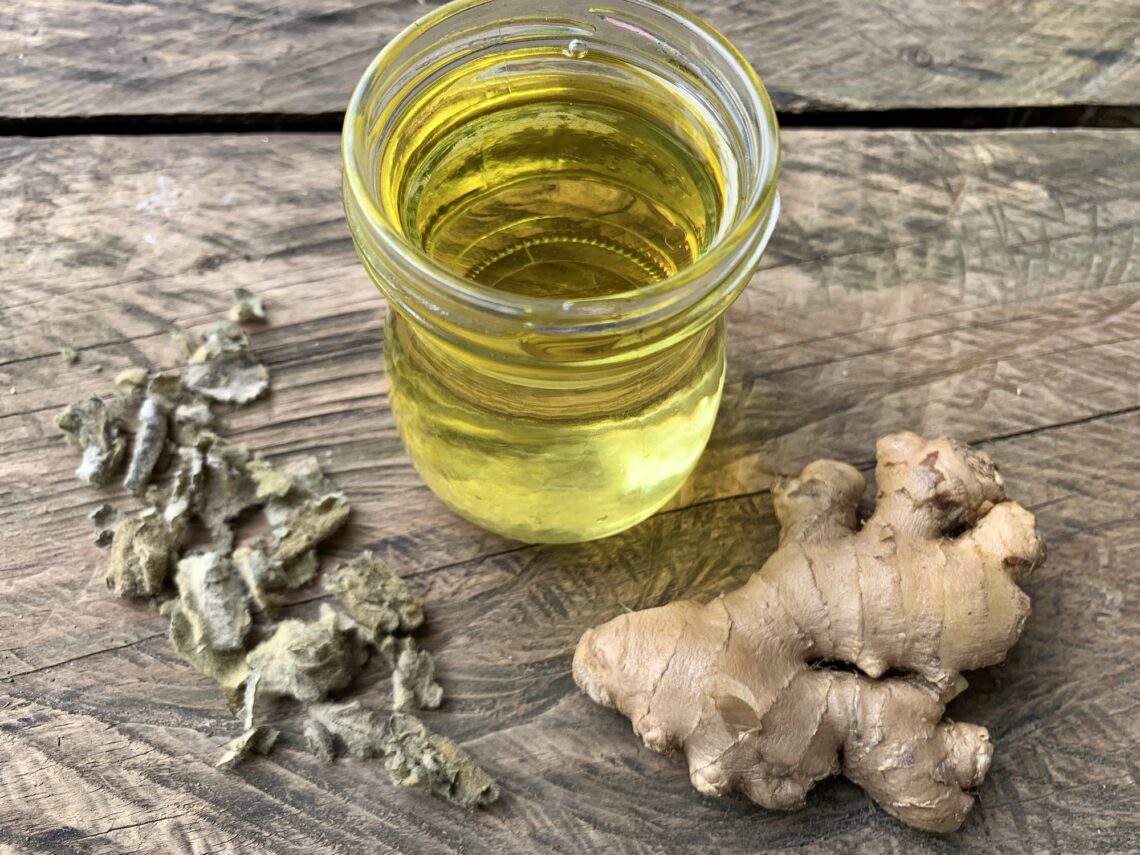
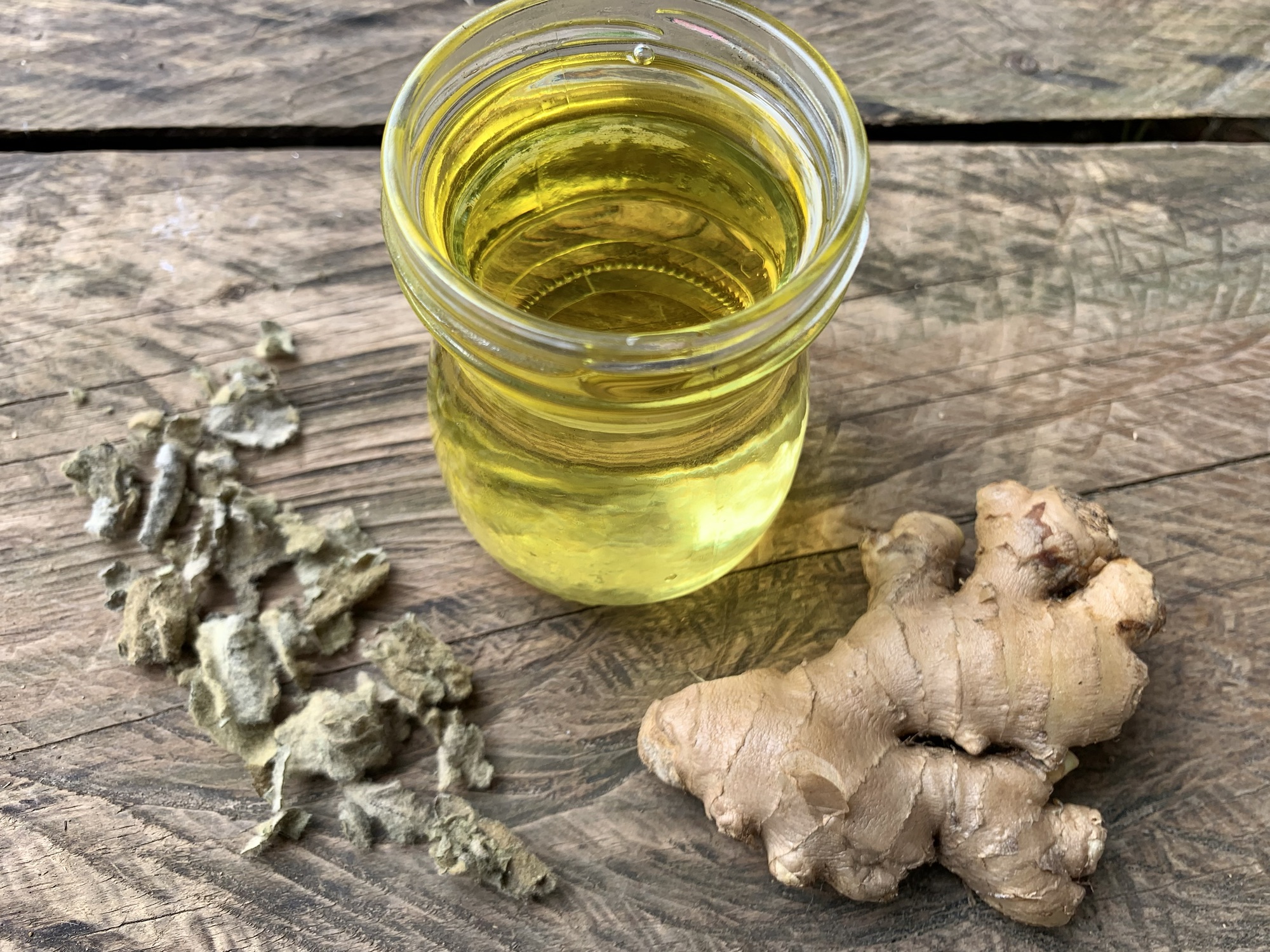
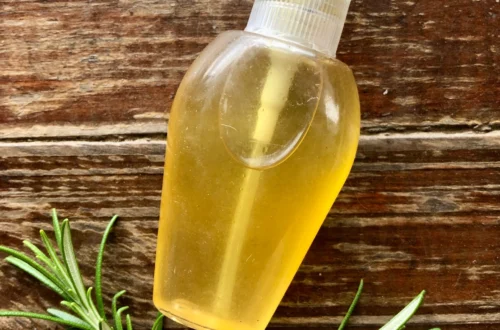
Sunflower oil infused with mullein and ginger makes a lovely massage oil. Sunflower oil makes a great base because is highly absorbent and doesn’t clog pores. It’s non-irritating and suitable for all skin types. It’s also rich in vitamin E and linoleic acid, compounds that nourish and soothe the skin.
Traditionally, mullein (Verbascum spp.) has been used for swelling, bruises, broken bones, and osteoarthritis. Herbalist Jim McDonald notes its particular affinity for back injuries and nerve pain. Scientific studies suggest its pain easing properties may be due to its powerful anti-inflammatory compounds.
Ginger (Zingiber officinale) has a long history of use for easing pain and promoting circulation. Its natural anti-inflammatory compounds can help reduce swelling, while its stimulating, warming effects soothes sore muscles and menstrual cramps. Research has also shown that applying ginger topically may reduce pain and improve mobility in individuals with osteoarthritis.
To make Mullein & Ginger Massage Oil, you will need:
- Dried mullein leaves and/or root
- Dried ginger root, chopped or ground
- Sunflower oil
- 190-proof alcohol (like Everclear)
- Fine cheese cloth or coffee filter
- Amber glass jar for storage
How to Make Mullein & Ginger Massage Oil:
- Prepare the herbs – Grind the dried mullein and ginger into a coarse powder. More surface area helps create a stronger infused oil.
- Moisten with alcohol – Pour just enough 190-proof alcohol over the herb powder to make it damp and crumbly, starting with about ½ oz and adding more if needed.
- Seal and rest – Place parchment paper under the jar lid to protect the seal, cap tightly, and let the mixture sit for 24 hours to begin the extraction process.
- Combine with carrier oil – After 24 hours, blend the herb/alcohol mixture with 6–8 oz of sunflower oil. Adjust the amount of oil as needed to achieve a smooth, blendable texture.
- Warm infusion – Gently warm the mixture in a double boiler for a few hours. This reduces the alcohol content and helps draw the plant’s beneficial compounds into the oil.
- Strain and bottle – Strain the oil thoroughly through a fine cheesecloth or a coffee filter to remove all the plant material.
- Store – Pour the finished oil into an amber glass jar, label it, and store it out of direct sunlight.
How to Use Mullein & Ginger Massage Oil:
Massage a small amount of oil into sore muscles, joints, or anywhere you’re holding tension. The oil absorbs best when applied to slightly damp skin after a shower or bath. Massaging a bit of oil onto your feet, neck, or shoulders before bed is a lovely way to promote relaxation and help you sleep restfully.
Store your oil in a cool, dark place and use within a few months for best results. Refrigeration can extend the shelf life, but isn’t necessary.
Ingredients
Method
- Grind about 1 oz dried herb into a coarse powder.
- Moisten the powder with just enough 190-proof alcohol (like Everclear) to make it damp and crumbly. Start with a ½ oz and add more if needed.
- Place parchment paper under the lid of a jar and cap tightly. Let the herb and alcohol mixture sit in the sealed jar for 24 hours.
- Blend the herb/alcohol mix with your carrier oil (start with 6-8 oz and add more if needed to get a blendable texture).
- Warm the mixture gently in a double boiler for a few hours to reduce alcohol content and boost extraction.
- Strain thoroughly through cheesecloth or a coffee filter.
- Bottle in an amber jar, label, and store out of direct light.
References
mcdonald, j. mullein (2016). Herbcraft.org. https://www.herbcraft.org/plants/mullein
Rondanelli, M., Fossari, F., Vecchio, V., Gasparri, C., Peroni, G., Spadaccini, D., Riva, A., Petrangolini, G., Iannello, G., Nichetti, M., Infantino, V., & Perna, S. (2020). Clinical trials on pain lowering effect of ginger: A narrative review. Phytotherapy research : PTR, 34(11), 2843–2856. https://doi.org/10.1002/ptr.6730
Therkleson T. (2014). Topical Ginger Treatment With a Compress or Patch for Osteoarthritis Symptoms. Journal of holistic nursing : official journal of the American Holistic Nurses’ Association, 32(3), 173–182. https://doi.org/10.1177/0898010113512182


One comment on “Mullein & Ginger Massage Oil”