Last Updated on October 26, 2025
An important aspect of Samhain rituals is reflecting on the cycle of life & death and remembering our ancestors. In Ecuador, Día de los Difuntos (Day of the Deceased) is a similar celebration that honors loved ones who have passed on.
After living and raising my kids in Ecuador for the past several years, I find that many of our family’s seasonal rituals blend aspects of nature-based celebrations from the Northern Hemisphere with those of the local culture. While I have yet to whip up a colada morada (we like to make this super easy Colada de Avena con Mora instead), it’s becoming a family tradition to make guaguas de pan to celebrate both Samhain and Día de los Difuntos.
Celebrating Día de los Difuntos
On November 2nd, people gather at cemeteries, bringing flowers, candles, and other offerings to the graves of their loved ones. Guaguas de pan, or “bread babies,” are a traditional food that is part of these celebrations.
The word guagua, sometimes spelled wawa, means baby in Quechua. These sweet breads are shaped like swaddled infants and decorated with colored icing. They are typically enjoyed with colada morada, a purple corn and fruit drink.
But guaguas de pan are more than just a holiday treat. Eating and sharing them is an act of connection, a way to honor ancestors while participating in a ritual that has been an important part of cultural celebrations for generations.
The Tradition of Guaguas de Pan
Guaguas de pan are a traditional food across the Andes. In addition to being a part of Ecuadorian culture, they are also commonly prepared in Peru and Bolivia, mainly as part of Día de los Difuntos celebrations.
In Peru and Bolivia, pan de wawa, pan wawa, t’anta wawas, tantawawas, or tantaguaguas, as they are called, are made with cinnamon, golden raisins, candied fruit, and anise, and are often decorated with a small plaster or ceramic face. They are often enjoyed with chicha, a fermented corn drink. Similar to Ecuadorian tradition, these breads are brought to cemeteries and shared at the graves of relatives, alongside the favorite foods of the deceased.
Across these regions, guaguas de pan are part of a meaningful ritual that brings people together and honors the cycles of life and death. Baking and sharing bread is simple yet profound, rooting us in traditions that carry the memories of those who have gone before us.
Making Guaguas de Pan with Sourdough
Masa madre, literally “mother dough,” or sourdough, is a living culture of yeast and lactobacillus bacteria. The fermentation process creates air bubbles, which act as a natural leavening for bread. This was the traditional way bread was made long before the days of pre-packaged commercial yeast.
Making guaguas de pan with sourdough not only adds health benefits, since it’s easier to digest and its nutrients are more bioavailable, but it also carries a deeper meaning. Preparing the bread this traditional way is a nod to our ancestors, honoring the centuries-old practice of baking naturally fermented bread.
I like to start my sourdough with ripe bananas, utilizing both traditional methods and a fruit that grows abundantly here in Ecuador. The natural sugars in the bananas give the wild yeast a boost, helping the starter ferment more quickly.
This approach is practical: it jump-starts fermentation, making the starter ready in just a day or two, whereas a starter made with only flour and water can take up to a week. It also adds another layer of intention by incorporating a plant that thrives here. In turn, this nourishes the yeast, improves fermentation, and helps make loaves that are soft and springy. Working with a living culture requires time, patience, and collaboration with nature, making it a much more mindful process than baking with pre-packaged yeast.
How to Make Guaguas de Pan de Masa Madre
Baking guaguas de pan with sourdough is a multi-day process, as you’ll need to allow time for the fermentation to occur. While it requires a bit of extra patience and effort to start a sourdough culture, let the dough rise naturally, and decorate the finished breads with natural ingredients, the resulting loaf is healthier and infused with more intention.
What You’ll Need
For the Sourdough Starter:
- Ripe bananas
- Flour
- Water
For the Dough:
- Flour
- Panela or brown sugar
- Salt
Directions
Prepare the Starter
Add the bananas to a large mixing bowl and mash them with the back of a wooden spoon. Stir in 2 cups of flour and 3 cups of water until well combined. Cover the bowl and let sit overnight. You can use a silicone bowl cover or a cheesecloth secured with an elastic, just make sure it’s tight enough to keep out bugs. Fruit flies love sourdough!
Check the Starter
The next day, check your starter. It should be nice and bubbly. If not, let it sit covered for a few more hours or up to a day until it begins to form bubbles.
Mix the Dough
Stir in the panela and salt. Then add the flour, one cup at a time, stirring until the dough is too thick to mix with a spoon. Knead in the remaining flour by hand.
Ferment
Return the dough to the bowl and cover. Let it sit overnight. The following day, the dough should have doubled in size. If not, allow it to rest for a few more hours or up to a day until it has risen.
Shape the Guaguas
Divide the dough into thirds to make three smallish loaves, or into six portions for smaller guaguas de pan. Form the dough into shapes that resemble swaddled babies and place them on a baking sheet.
Bake
Bake at 350°F for about 30 minutes for the larger loaves (less if you shaped smaller breads) or until the bread turns golden brown and makes a distinct “thunk” sound when tapped. Then remove the bread from the oven and let it cool.
Decorate
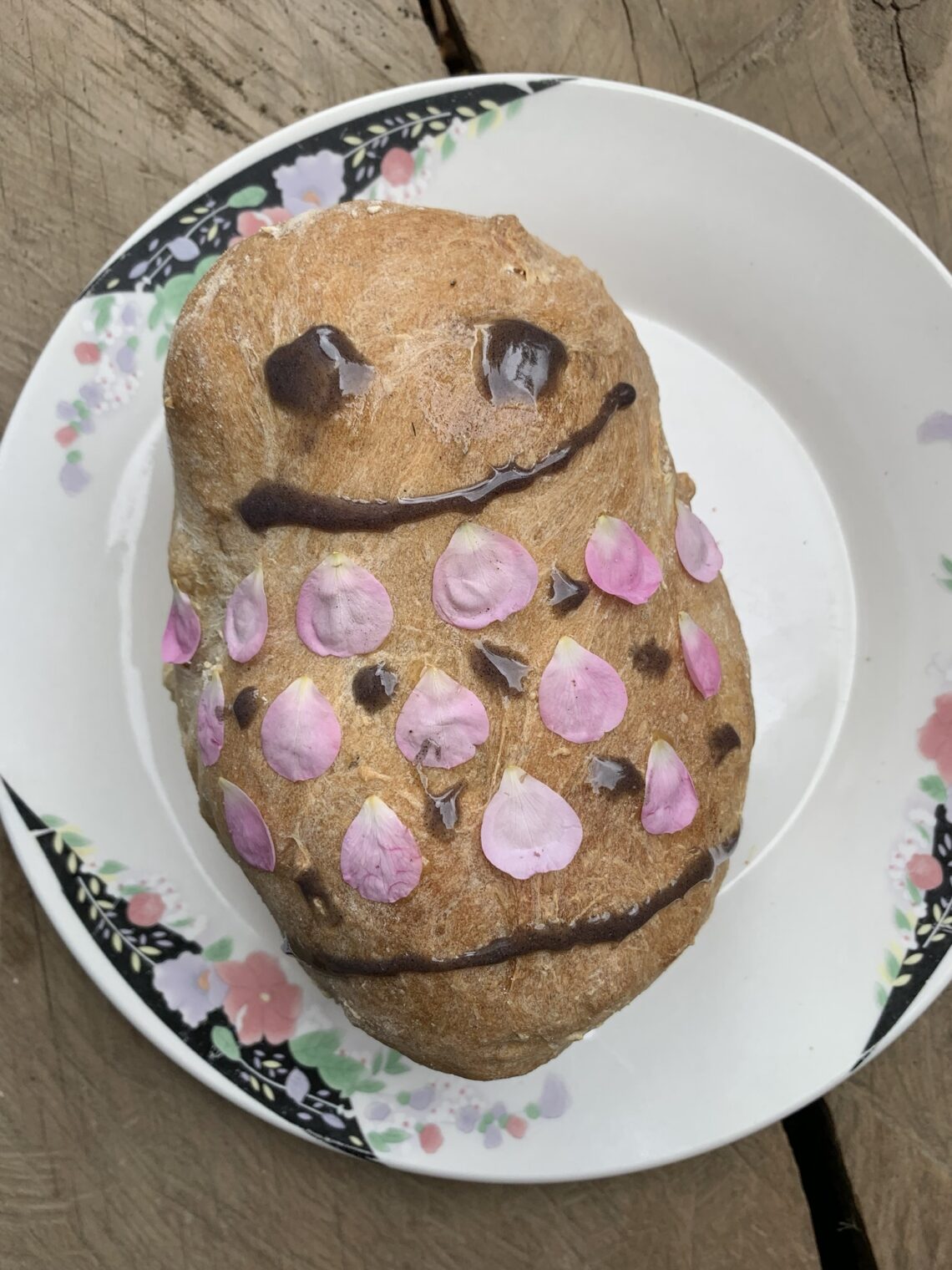
Decorate as desired. Guaguas are often adorned with brightly colored icing, but we like to use homemade icings made with more natural ingredients and edible flowers instead.
This year, we kept it simple and used honey to “glue” on rose petals. We then mixed butterfly pea flower powder with honey to make colored icing for other details. Brightly colored butterfly pea frosting is another great option that doesn’t contain harmful food dyes This is a great time to involve the little ones. Kids love decorating guaguas de pan!
Ingredients
Method
- Add the bananas to a large mixing bowl. Mash them with the back of a wooden spoon.
- Stir in 2 cups of flour and 3 cups of water until well combined. Cover the bowl and let sit overnight. You can use a silicone bowl cover or a cheese cloth and an elastic, but make sure it’s tight enough to keep out the bugs.
- The next day, check your starter. It should be nice and bubbly. If not, let it sit covered for another few hours to a day until bubbly.
- Stir in the panela and salt into the bubbly starter. Then add the flour, one cup at a time. Stir it until the dough is too thick, then knead in the rest.
- Return the dough to the bowl and cover. Let it sit overnight.
- The next day, the dough should have doubled in size. If not, let it sit another few hours to a day until it has risen.
- Divide the dough in thirds to make three smallish loaves or into six portions for smaller guaguas de pan.
- Form the dough into shapes that look roughly like a swaddled baby. Then place them on a baking sheet.
- Bake at 350°F for about 30 minutes (for the larger loaves), or until the bread turns golden brown and makes a distinct thunk sound when you tap it.
- Remove the bread from the oven and let it cool.
- Once the bread has cooled, decorate your guaguas de pan as desired. We used honey to “glue” on rose petals and then mixed butterfly pea flower powder with honey to make a colored icing for the other details.