During the winter months growing your own sprouts is a great way to enjoy fresh, homegrown greens, even though your garden may be buried in snow. Sprouting seeds is simple and doesn’t require much space or fancy equipment. And just a few days, you’ll have tasty, nutrient dense sprouts to enjoy!
Sprouting Seeds: A Simple Imbolc Ritual
Imbolc is a traditional festival marking the halfway point between winter solstice and spring equinox. For many folks in the Northern hemisphere, it’s a time to celebrate the first stirrings of spring, despite still being very much in the thick of winter. Sprouting seeds indoors is a perfect way to connect with this energy of renewal and birth and to nourish the hope that warmth and life will return.
Growing Sprouts with Kids
Growing sprouts is a fun activity to do with kids that lends many educational opportunities. Even if they have experience helping in the garden, much of the magic of the earliest stages of plant development happens beneath the soil so sprouting seeds gives them an opportunity to observe the process firsthand. Try growing many types so they can see how each plant develops differently and decide which sprouts taste best to them. They may even want to record their observations in a journal.
This fun activity not only helps teach children about plant development, it also results in delicious, nutritious greens to enjoy during the cold winter months when fresh food is in short supply.
The Best Types of Seeds to Sprout
There are several types of seeds that can be consumed as sprouts. Here are a few of the most popular:
- Adzuki beans
- Alfalfa
- Broccoli
- Chia
- Chickpeas
- Clover
- Fenugreek
- Lentils
- Mung bean
- Pea
- Quinoa
- Radish
- Soybean
- Sunflowers
- Wheat berries
Common bean, kidney/runner bean, and lima bean (Phaseolus spp.) sprouts should not be eaten raw. They contain a toxic constituent that can cause severe gastric distress, including stomach pain, vomiting, and diarrhea. This toxin is destroyed during the cooking process.
Eating Sprouts
Sprouts are generally consumed raw, but also can be lightly cooked or used to garnish hot dishes. Smaller, more delicate sprouts, like alfalfa and broccoli, are a tasty addition to sandwiches, wraps, burgers, and salads. Bigger sprouts, like mung beans and soybeans, can be stir-fried and added to soups. Sunflower, chickpea, and lentil sprouts can be blended into dips and spreads. You might also want to try putting sprouts in a smoothie.
How to Grow Sprouts
Materials:
- 2 Tbsp – ½ cup seeds to sprout (see list)
- Seed sprouting tray or sprouting jar
- Water
Directions:
- Add seeds to a jar or bowl. Fill with water covering the seeds by several inches.
- Soak the seeds for 8 hours or overnight.
- Drain the seeds and rinse them.
- Pour the sprouts into a seed sprouting tray or top the jar with a cheesecloth or sprouting lid.
- Rinse and drain the seeds 3 times daily until the sprouts are ready to eat.
- Within a few days, sprouts will grow.
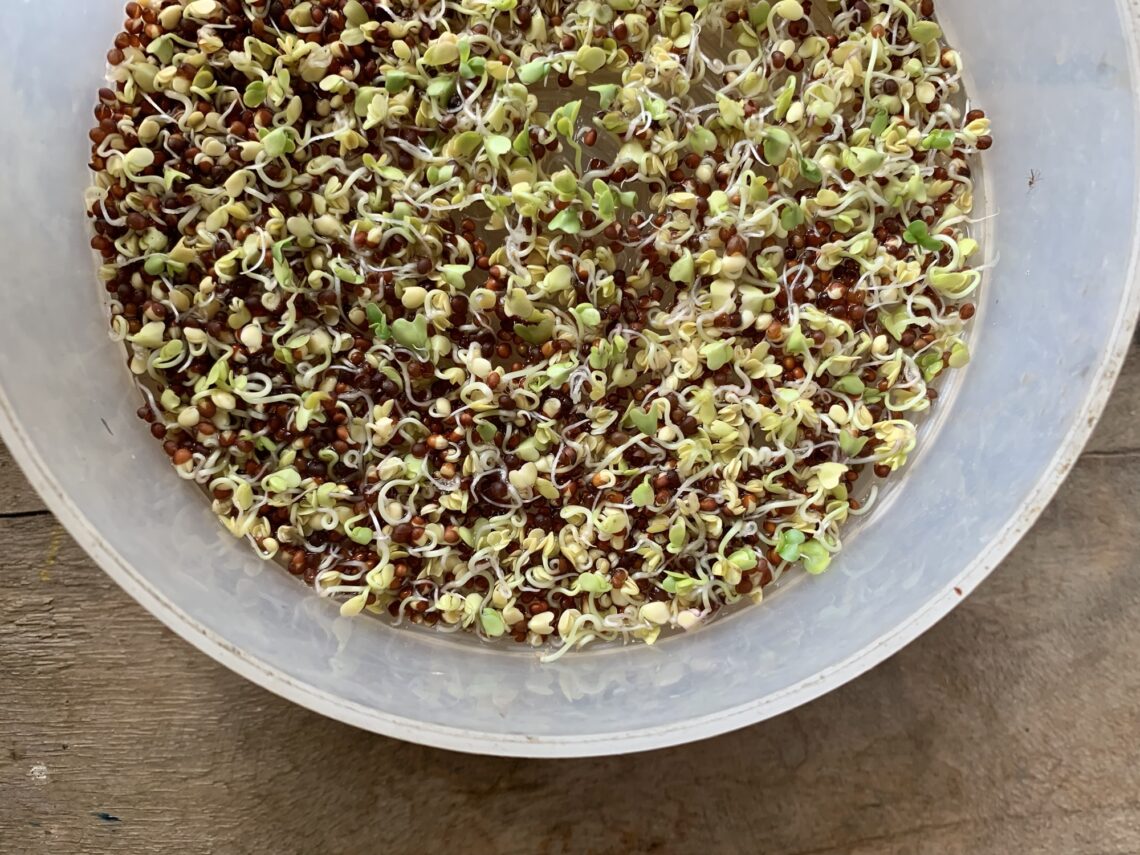
- Sprouts are ready to eat when they are ½ to 2 inches long (depending on the type of plant) and the seed hull falls off. You can wait until they develop their first set of leaves, but it’s also okay to eat them sooner.